Minggu, 05 Desember 2021

Does Echinacea Contain Vitamin C

Does Echinacea Contain Vitamin C

When you're in the grip of a phlegm-fuelled misery fest, you can start to feel a little desperate for any sort of relief.

Take a squiz at the vitamin and supplement shelves at the supermarket, or browse the chemist aisles, and you'll find plenty of things promising a solution.

But before you make a purchase, you should know that some of these "solutions" are backed by a lot more evidence than others.

Here's a closer look at some of the most popular cold-busting options:

  • Vitamin C
  • Zinc
  • Echinacea
  • Garlic

Vitamins and supplements are regulated

But before we look at how the science works, it helps to understand how 'medicines' are regulated in Australia.

In a nutshell, not all medicines undergo the same level of scrutiny or oversight. So even though vitamin C might sit next to a cold and flu medication on the shelf, they don't necessarily undergo the same scrutiny.

Complementary medicines and supplements, which include vitamins, minerals, herbal, aromatherapy and homeopathic products, are in a different category to more conventional medicines, such as prescription drugs or over-the-counter medications.

In Australia, all medicines are regulated by the Therapeutic Goods Administration — under which drugs can be categorised as registered (AUST R) or listed (AUST L).

Registered medicines, including prescription medications (e.g. antibiotics) and over-the-counter medications (e.g. painkillers), are "assessed by the TGA for quality, safety and efficacy".

Most complementary medicines are listed, meaning that while they have to meet some safety and hygiene standards, they don't have to meet the same strict efficacy or effectiveness standards that registered medicines do.

This means complementary medicines might not come with the same effectiveness as your conventional medicines.

However, like conventional medicines, they can come with possible side effects.

You can also overdose on some of them and they can interact with other medicines you take.

These risks are greater for certain people, such as those with pre-existing health conditions or pregnant or breastfeeding women.

"Safety is a relative thing," explains clinical pharmacology professor Ric Day, from St Vincent's Hospital in Sydney.

"If you are treating someone with a serious illness you'd perhaps tolerate more serious side effects than if you're treating someone with a one-off headache."

The bottom line: it's always a good idea to check with your pharmacist or your GP before taking any sort of medication, including vitamins or supplements.

So, what's the low-down on cold-busting complementary medicines?

Vitamin C

Glass of a citrus drink for story about how to know if you're getting enough vitamin c

Enough vitamin C can often be found in a rich diet of fruit and vegetables.( Pexels: PhotoMIX )
  • What it is: Vitamin C is an essential nutrient — we need it for growth and repair and staving off illness.
  • Cold and flu: May reduce symptoms by up to a day and a half.
  • Possible side effects: Stomach pains or diarrhoea if you have too much.

Eating a diet rich in fruits and vegetables is the best way to not only get your vitamin C, but the other numerable benefits that come with a balanced diet, too.

If you're finding it tough to get plenty of fruit and veg, though, taking vitamin C supplements is an alternative way to work the nutrient into your regime.

As far as protection from colds, taking the supplement hasn't been shown to have any kind of preventative effect. Some studies have shown, however, that if you take it early enough in your sickness, then it can reduce symptoms by up to a day and a half.

Adults only need about 30mg of vitamin C per day — and taking any more than 1g can lead to stomach pains or diarrhoea.

"If you're taking multiple different products with similar ingredients, you can easily go over the recommended limit," explains Nerida Packham, pharmacist and Medicines Line Team lead at NPS MedicineWise.

"Remember to look at the active ingredients."

Zinc

  • What it is: Zinc is a naturally occurring element, which we only need very tiny amounts of to keep our bodies ticking over.
  • Cold and flu: Similar to vitamin C, can reduce symptoms by about a day.
  • Possible side effects: Taking too much can have a negative impact on your immune system.

If you eat meat, fish or dairy, the chances are you're getting plenty of it right there. If you're vegetarian or vegan, it might be worth having a chat with a health professional just to check.

Similar to vitamin C, there is a small amount of evidence that suggests zinc might be able to reduce your cold symptoms by about a day if you take as soon as you start to feel symptoms.

If you're going to give it a go, just be careful to only take the recommended dosage.

Taking too much can lead to deficiencies in other minerals as zinc can affect their uptake by the body, possibly leaving your immune system even worse for wear.

ABC Everyday in your inbox

Get our newsletter for the best of ABC Everyday each week

Echinacea

  • What it is: Echinacea is a plant, and different remedies will use different parts of the plant in varying amounts.
  • Cold and flu: The evidence is unclear.
  • Possible side effects: May cause rashes in kids, trigger allergies for asthmatics, interact with other drugs.

Echinacea is often sold as an "immune-boosting" supplement. But this is even harder to pin down the evidence for than vitamin C or zinc — it's a plant, and different remedies incorporate different parts and different amounts.

There also isn't a particular known active ingredient, which can make it tricky to do quality experiments on.

There are a handful of safety concerns associated with the plant, too. It can bring out rashes in children, trigger allergies in asthma patients and — like many complementary medicines — interact with other drugs.

Garlic

Garlic cloves for a story about herbs that can keep colds and flus away

While garlic is a natural herb, it can have some drug interactions.( Unsplash: Mike Kenneally )
  • What it is: A natural herb that's also sold in supplement form.
  • Cold and flu: Its impact on preventing or treating cold symptoms is unclear.
  • Possible side effects: May interact with other drugs, depending on the amount you're taking.

Garlic has long been thought to help with the symptoms of colds and flu.

"There aren't enough clinical trials to provide any solid evidence that it can either prevent colds or treat symptoms," Professor Day says.

Surprisingly, even though garlic is a natural herb, it can have some drug interactions when it's taken in a high amounts in supplement form. These drugs include blood thinners and antivirals.

Don't be shy to ask for advice

Complementary medicines are growing in popularity and you shouldn't feel embarrassed about asking any sorts of questions about them from a health professional.

Of course, there is plenty of information online too, but not all of it is trustworthy.

She advises sticking to reputable websites, like the National Health and Medical Research Council or the US' National Center for Complementary and Integrative Health, or calling MedicineWise.

So, what should you do when you feel a cold or flu coming on?

Unfortunately, there is no miracle cure.

Professor Day recommends taking drugs targeted for specific symptomatic relief.

"For a headache, you would take analgesics so, most commonly, paracetamol. If you want to not be dripping then you can take an antihistamine," he says.

He also emphasises that it's important to get plenty of rest, and stay home if at all possible, as this stops the virus from spreading.

"Just look after yourself a bit more than you normally would. If you're a regular exerciser, then you don't want to be thrashing yourself in the grip of a virus. Take care of yourself, rest, and get plenty of fluid."

This is general information only. For detailed personal advice you should see a qualified medical practitioner who knows your medical history.

Posted , updated

Does Echinacea Contain Vitamin C

Source: https://www.abc.net.au/everyday/do-cold-and-flu-vitamins-supplements-like-garlic-echinacea-work/11114866

Share:

Sabtu, 04 Desember 2021

Cremas Con Retinol Y Vitamina C

Cremas Con Retinol Y Vitamina C

La combinación de algunos ingredientes puede hacer magia con las pieles. Algunos tips para usar el ácido hialurónico, la vitamina C y el retinol juntos:

.

💥 para arrugas, manchas y luminosidad, usen vitamina C de día y retinol a la noche.

💥 para combatir las arrugas, rellenar y luchar contra la pérdida de tonicidad: ácido hialurónico de día y retinol de noche.

💥 si buscamos luminosidad, hidratación y firmeza: vitamina C de día y ácido hialurónico de noche. .

.

Además, en estos días de pandemia, la piel se ve afectada por el stress, los nervios y la ansiedad. Eso puede despertar casos de acné, rosácea etc. Pueden usar el Hyalu B5 o ácido hialurónico para la piel seca e irritada; prevenir manchas de un brote de acné con la vitamina C y usar el retinol también para combatir esos granitos.

  • No se recomienda mezclar en la misma rutina la vitamina C y el retinol en diferentes productos porque pueden irritar la piel. Es diferente si ambos ingredientes están en la misma fórmula; quizás no estén los dos en sus versiones más potentes, quizás uno sea un derivado y otro no, etc.
  • No hay ningun problema en poner ácido hialurónico y vitamina C en la misma rutina, lo mismo que el hialurónico y el retinol.
  • La niacinamida y el ácido salicílico van muy bien juntos. Ambos mejoran la apariencia de los poros, haciéndolos más chicos y previniendo el acné.
  • El pantenol (vitamina B5) es ideal también para inhibir la inflamación de los retinoides.
  • El hialurónico es el mejor amigo del glicólico y de los tratamientos estéticos, así que pueden usarlos sin problema.
  • Con respecto al uso de los ácidos queratolíticos en rutinas donde quieran incluir vitamina C y retinol, siempre tengan presente la respuesta de cada piel. Como siempre les digo, pregunten a sus dermatólogos. El glicólico y el retinol se combinan muy bien. Se dice que los AHA y la vitamina C combinadas pueden irritar y resecar en exceso. Si no se animan a usarlos en la misma rutina, pueden usarlos en noches alternadas (una noche retinol, otra noche glicólico). O usar Vitamina C de día y glicólico de noche.  Algunas marcas como The Chemist Look dicen que no habría problemas, como explicamos en este post.
  • La vitamina C se lleva muy bien con los péptidos, ambos promueven la producción de colágeno y elastina.
  • La vitamina C y la E siempre están juntas. La vitamina E previene que la C se oxide más rápido. Ademas, juntas son el gran duo antioxidante.
  • El ácido hialurónico se lleve muy bien con las ceramidas, ambos hidratan y reparan la barrera de la piel.
  • Hay opiniones diversas sobre la combinación de niacinamida y vitamina C: algunos especialistas dicen que uno inhibe al otro y otros especialistas dicen que nada de eso pasa. Por las dudas, yo los uso por separado, vitamina C de día y niacinamida de noche.
  • Si van a usar una crema después del retinol, que tenga aceites vegetales, ácidos grasos, etc. Traten de no colocar antes alguna crema o limpieza con parafina, porque pueden irritar.
  • Retinol y bakuchiol pueden ir juntos.
  • Mejor no mezclar los tratamientos anti acné con exfoliantes químicos: pueden resecar e irritar. Y recuerden que la irritación genera manchas.

Como siempre les digo: no es necesario usar estos productos, pueden mirar los ingredientes y usar las mismas moléculas de otras marcas. También depende mucho de cada piel y cada tratamiento, así que siempre pregunten a su dermatólogo de confianza antes de usar un producto.

Cremas Con Retinol Y Vitamina C

Source: http://www.getglam.com.ar/2020/07/combinaciones-entre-el-retinol-la.html

Share:

Can I Take Vitamin C While On Chemotherapy

Can I Take Vitamin C While On Chemotherapy

Live your healthiest life

Google Health is committed to helping everyone live more life every day through products and services that connect and bring meaning to health information. We're developing technology solutions to enable care teams to deliver better, faster and more connected care. We're working on products and features to empower people to be healthier with the information, assistance, and connections they need to act on their health. And we're exploring the use of artificial intelligence to assist in diagnosing cancer, predicting patient outcomes, preventing blindness and much more. Our work complements Google's mission to organize the world's information and make it universally accessible and useful.

The Check Up - Conversations with Google Health

Watch segments from the event to learn more about Google's COVID-19 response, how AI technology can help doctors, ways that mobile technology can transform healthcare, and more. Or watch the full event here.

Dr. Karen DeSalvo, Chief Health Officer of Google Health, invites Dr. Garth Graham from YouTube and Dr. Rob Califf from Verily to share insights on how different parts of Google - YouTube, Google Health & Verily - have collaborated on the response to COVID-19.

1 of 7

Join Paul Muret, Google Health's VP of Product & Design, in a conversation with Dr. Richard Fogel, Chief Clinical Officer, Ascension, where they discuss how their partnership is making health information more accessible and useful.

2 of 7

On World Cancer Day, Dr. Alan Karthikesalingam, Research Lead, Google Health UK, shares perspectives on how AI can be used to improve cancer therapies with Dr. Chris Beltran, Mayo Clinic School of Medicine, and Suzanne Steer, cancer patient.

3 of 7

Diabetes is a disease affecting 415 million people globally, each at risk of developing diabetic retinopathy, which can cause blindness. Sunny Virmani, Google Health Product Manager, discusses AI technology's role in filling healthcare gaps with researchers, Dr. Raman of Sankara Nethralaya in India and Dr. Paisan of Rajavithi Hospital in Thailand.

4 of 7

Michael Howell, Todd Mekjian, Divya Padmanabhan, and Jacqueline Shreibati of Google Health give a behind-the-scenes look at how Google Health is working to improve existing products and develop online tools to empower people along their healthcare journey.

5 of 7

Shwetak Patel, Director of Health Technologies at Google Health, shares exciting news on recent advances with the sensor technology underpinning mobile vitals.

6 of 7

John Brownstein of Harvard Medical joins Jon Morgan, Google Health Product Manager, for a lively discussion on the Google Health Studies Android app and their partnership on the initial respiratory health study.

7 of 7

Graphic with colors and shapes

Giving information needed to respond to COVID-19

Our priority has been to see that people get the right information at the right time because we believe it can save lives in a pandemic. Teams across Google are also contributing tools and resources to the public health, scientific and medical communities who are addressing the needs resulting from the COVID-19 pandemic.

Care that works for women

At Google Health, we're dedicated to improving women's physical and mental health and the patient care they receive through research, product development, and partnerships.

Woman reading outdoors

Helpfulness in health across Google

While Google Health focuses on advancing the world of care, teams across Google and Alphabet are also contributing to innovations in health and providing resources in the moments that matter. Here are just a few of the other health initiatives going on at Google.

Privacy matters

When you use Google's products and services, you trust us with your data. It's our responsibility to keep your data private and secure. And at Google Health, we are guided by core privacy and security principles as we build new products and services.

See Google's most recent work in health

Learn more about our recent launches and announcements on The Keyword, Google's official blog.

*Sleep Sensing is available for free preview until next year. After preview ends, paid subscription may be required. Learn more at g.co/sleepsensing/preview. Features are subject to your permissions and settings. They use motion, sound, and other device and sensor data to work and require placing the device close to the bed and calibrating the device for your sleeping position. Google Assistant, Google Fit app and other Google apps may be required for full functionality. Device placement and nearby people, pets, or noises can cause inaccurate readings.

Can I Take Vitamin C While On Chemotherapy

Source: https://health.google/

Share:

Bio Life Vitamin C Review

Bio Life Vitamin C Review

A Guide to Vitamin C Serums

leonori/Shutterstock

For 70 years Vitamin C has been one of the biggest weapons in the skin care industry. It's used to make cleansers, moisturizers, lotions, masks, and serums. So what is this powerful vitamin? How can it benefit you? Why should you use serums that contain Vitamin C? We're here to answer all of those burning questions in this complete guide and reveal the many benefits Vitamin C serums offer for your skin.

What Are Vitamin C Serums?

There are many variations of Vitamin C, but the most popular is ascorbic acid, a common ingredient in skincare products. However, all the variations of Vitamin C have anti-inflammatory benefits.

Vitamin C Serums are products that contain a high level of Vitamin C. They're used to treat wrinkles, sagging skin, lighten dark or red spots, prevent breakouts and even your skin tone. Basically, they battle all of those annoying skin issues. There are loads of products out there that claim they'll save your skin, but some can cause damage. Vitamin C is one of the most revered ingredients and conclusive research has shown how effective it can be.

How Are Vitamin C Serums Made?

Well so far we've talked about how incredible Vitamin C is and it sounds like a dream come true doesn't it? It's not all good. In fact, the mighty vitamin is unstable when it's exposed to air and light. Other ingredients need to be used to stabilize it and allow it to deliver amazing results. The serums are combined with ferulic acid and Vitamin E. According to researchers the perfect mixture is 15% Vitamin C with 1% Vitamin E and 0.5% ferulic acid. This makes Vitamin C perform to the best of its abilities, without damaging your skin.

What Does Vitamin C Serum Do for Your Face?

Boosts Collagen Production: Collagen keeps your skin firm and prevents sagging. Environmental factors such as lifestyle choices and pollution can increase the elasticity of your skin, so it's important you try to increase your collagen production.

Hydrates Your Skin: Dry skin is a common issue, but Vitamin C can help to give your skin that much-needed moisture boost. Remember, it doesn't work immediately so you need to keep applying the serum to see results.

Brightens Your Complexion: Dark spots on your skin are caused by the overproduction of melanin. Vitamin C decreases the production and lightens the dark spots to even out your complexion.

Reduces Redness and Inflammation: Conditions such as Rosacea leave many people searching for a magic cure. Vitamin C helps facial redness and inflammation by reducing the appearance of broken capillaries.

Why Should You Be Using Vitamin C Serum?

Don't think Vitamin C serums are just beneficial for your face. They can also shield you from sun damage and reduce stretch marks.

Saves You From The Sun: Prolonged exposure to UV rays can cause long-term damage to your skin. Luckily, Vitamin C is a powerful antioxidant that reduces red sports and prevents sunburn from spreading.

Fades Acne Scars: Acne plagues most of us at some point and we look forward to being free. Most of us get stuck with some scars but Vitamin C helps to fade scars and even out any discoloration.

Reduces Stretch Marks: Yes, Vitamin C serum can even help prevent those unsightly stretch marks by tightening your skin.

Are you ready to change your skin? Add a Vitamin C serum to your beauty regimen and enjoy a glowing complexion.

Bio Life Vitamin C Review

Source: https://www.bloglines.com/article/a-guide-to-vitamin-c-serums?utm_content=params%3Ao%3D740010%26ad%3DdirN%26qo%3DserpIndex

Share:

Avalon Organics Vitamin C Balancing Toner

Avalon Organics Vitamin C Balancing Toner

Style

Get Your Glow On With These 5 Skin-Protecting Vitamin C Creams

Bustle/Amazon

Vitamin C: Not just for treating scurvy anymore. "Vitamin C is essential for good skin health," NYC-based dermatologist Dr. Kenneth Howe tells Bustle. "It's the most abundant and important antioxidant in our skin." As an antioxidant, vitamin C protects your skin from environmental aggressors like the sun, pollution, and smoke; and, according to Dr. Howe, an overabundance of those free radicals can result in collagen depletion, hyperpigmentation, and even skin cancer. It follows, then, that infusing your skin with vitamin C can result in a glowier, clearer complexion, so you'll want to get your topical vitamin C wherever you can. The best vitamin C creams are a good place to start.

Vitamin C is especially valuable for providing a deeper layer of sun protection that SPF can't quite reach. "Even the most diligent sunscreen applier will still have some UV rays penetrate the skin — sunscreens are screens, after all; they block the transmission of only a given percentage of incident UV radiation," Dr. Howe says. "Some of it still gets through. And that's where antioxidants like vitamin C come in. Antioxidants snuff out the damage that UV rays cause by quenching free radicals present in the skin." That said, this is not a reason to skimp on the face sunscreen you're already wearing every day (right?).

Dr. Howe recommends applying vitamin C products in the morning; that way, you're providing your skin with a fresh supply of the antioxidant's protective powers. And because they're typically used during the day, lots of vitamin C creams include other ingredients that brighten, smooth, hydrate, and otherwise benefit your skin.

Ahead, you'll find five of the best vitamin C creams for all manner of budgets and skin types. Put them on in the morning for luminous skin all day long, then drink a glass of orange juice so your teeth don't fall out.

We only recommend products we love and that we think you will, too. We may receive a portion of sales from products purchased from this article, which was written by our Commerce team.

1

The Overall Best Vitamin C Cream

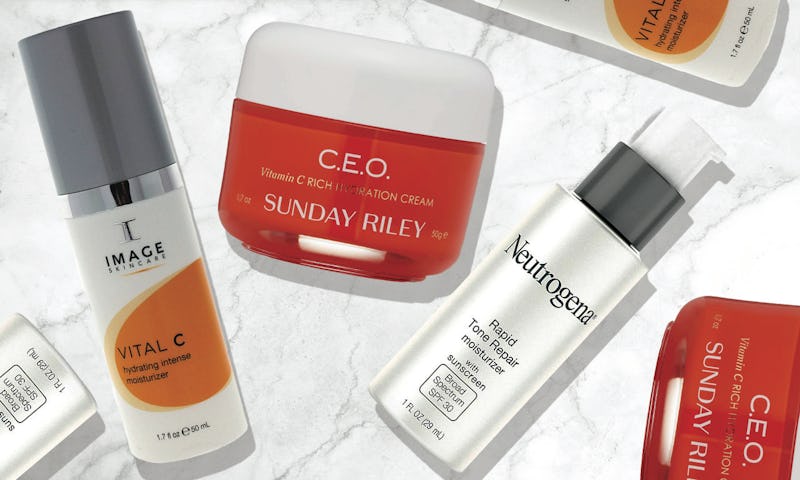
There's no way to sugarcoat it: At $65, this Image Skincare Vital C Hydrating Intense Moisturizer is expensive. But if it's any consolation, this is my favorite daytime moisturizer of all time. Some of the main ingredients in here are water, glycerin, hyaluronic acid, and shea butter, which all work together to pull and seal moisture into your skin. It leaves my combination skin feeling soft, bouncy, and not at all greasy. I also like its bright citrusy scent, courtesy of antioxidant-rich orange peel extract. If you like this moisturizer, check out the rest of Image's vitamin c-centric Vital C line. I'm partial to their Vital C Hydrating Enzyme Masque, which I use weekly for some gentle resurfacing.

2

The Best (Affordable) Vitamin C Cream With SPF

As Dr. Howe mentioned, vitamin C creams are best used during the day so the antioxidants can help stave off environmental aggressors you may encounter out in the world — and, in the skin-care lexicon, "daytime" means "you also need to be wearing SPF." This Neutrogena Rapid Tone Repair Moisturizer With Sunscreen has that, and so many other things, covered. The ingredients are basically a greatest-hits list of everything you need for luminous, even, and sun-protected skin. Retinol SA, a gentle form of retinol infused with hyaluronic acid, gives your skin the smoothing and resurfacing effects retinol is beloved for, without the dryness and irritation it's demonized for. Then there's straight-up hyaluronic acid for hydrating and plumping, vitamin C for brightening and protecting, and broad spectrum SPF 30 for staving off UVA/UVB rays. Even better: This one-size-fits-all AM moisturizer costs just about $18 on Amazon.

3

The Best Eye Cream With Vitamin C

Boosting collagen production, reducing hyperpigmentation, generally enlivening tired, sallow skin: These are a few of my favorite things about vitamin C creams, and they are, almost always, the things your under-eyes could use more of. Along with that hero ingredient, this moisturizing (but non-greasy) Redermic C Pure Vitamin C Eye Cream from La Roche-Posay contains lots of botanical oils and a healthy dose of hyaluronic acid, the other, unofficial hero ingredient on this list. Neurosensine, a naturally occurring dipeptide, and the brand's signature thermal water are also included in the formula to reduce redness and provide a much-needed cooling effect. Use this one during the day, and La Roche-Posay's Redermic R Retinol Eye Cream at night if you take your depuffing regimen seriously.

4

A Great Mid-Range Vitamin C Gel-Cream

The Body Shop's Vitamin C Glow Boosting Moisturiser has a refreshing, cooling gel texture, which makes this an especially good choice if you have oily skin and find traditional creams too heavy or greasy. Along with vitamin C derived from Amazonian camu camu berries, this one contains soothing aloe vera and conditioning vitamin E and sesame seed oil. It's a zingy little pick-me-up for your skin in the morning, and it'll provide a soft, dewy canvas for your makeup. Just let the gel sink in and dry for a few minutes before you do that.

5

Another Luxurious Vitamin C Cream To Consider

The C.E.O. Vitamin C Rich Hydration Cream from Sunday Riley sets itself apart from others like it for its extra-special ingredients, which are both botanically and scientifically derived. Lime pearl extract, a natural source of AHAs, gently sloughs away the layer of dead cells on top of your skin so the cream's 5% vitamin C can absorb more thoroughly. Meanwhile, turmeric and exopolysaccharides provide more targeted protection from environmental pollution. (The latter is particularly effective for staving off the pollution particles found in smog.) Otherwise, the texture, slip, and orangey scent are similar to the Image moisturizer, so go for this one if you're very exposed to pollution (hi, fellow New Yorkers!), or if you're in the cult of Sunday Riley.

Experts:

Dr. Kenneth Howe, board-certified dermatologist practicing at Wexler Dermatology.

Avalon Organics Vitamin C Balancing Toner

Source: https://www.bustle.com/p/the-5-best-vitamin-c-creams-22584922

Share:

Abbott Vitamin C Tablets

Abbott Vitamin C Tablets

A Guide to Vitamin C Serums

leonori/Shutterstock

For 70 years Vitamin C has been one of the biggest weapons in the skin care industry. It's used to make cleansers, moisturizers, lotions, masks, and serums. So what is this powerful vitamin? How can it benefit you? Why should you use serums that contain Vitamin C? We're here to answer all of those burning questions in this complete guide and reveal the many benefits Vitamin C serums offer for your skin.

What Are Vitamin C Serums?

There are many variations of Vitamin C, but the most popular is ascorbic acid, a common ingredient in skincare products. However, all the variations of Vitamin C have anti-inflammatory benefits.

Vitamin C Serums are products that contain a high level of Vitamin C. They're used to treat wrinkles, sagging skin, lighten dark or red spots, prevent breakouts and even your skin tone. Basically, they battle all of those annoying skin issues. There are loads of products out there that claim they'll save your skin, but some can cause damage. Vitamin C is one of the most revered ingredients and conclusive research has shown how effective it can be.

How Are Vitamin C Serums Made?

Well so far we've talked about how incredible Vitamin C is and it sounds like a dream come true doesn't it? It's not all good. In fact, the mighty vitamin is unstable when it's exposed to air and light. Other ingredients need to be used to stabilize it and allow it to deliver amazing results. The serums are combined with ferulic acid and Vitamin E. According to researchers the perfect mixture is 15% Vitamin C with 1% Vitamin E and 0.5% ferulic acid. This makes Vitamin C perform to the best of its abilities, without damaging your skin.

What Does Vitamin C Serum Do for Your Face?

Boosts Collagen Production: Collagen keeps your skin firm and prevents sagging. Environmental factors such as lifestyle choices and pollution can increase the elasticity of your skin, so it's important you try to increase your collagen production.

Hydrates Your Skin: Dry skin is a common issue, but Vitamin C can help to give your skin that much-needed moisture boost. Remember, it doesn't work immediately so you need to keep applying the serum to see results.

Brightens Your Complexion: Dark spots on your skin are caused by the overproduction of melanin. Vitamin C decreases the production and lightens the dark spots to even out your complexion.

Reduces Redness and Inflammation: Conditions such as Rosacea leave many people searching for a magic cure. Vitamin C helps facial redness and inflammation by reducing the appearance of broken capillaries.

Why Should You Be Using Vitamin C Serum?

Don't think Vitamin C serums are just beneficial for your face. They can also shield you from sun damage and reduce stretch marks.

Saves You From The Sun: Prolonged exposure to UV rays can cause long-term damage to your skin. Luckily, Vitamin C is a powerful antioxidant that reduces red sports and prevents sunburn from spreading.

Fades Acne Scars: Acne plagues most of us at some point and we look forward to being free. Most of us get stuck with some scars but Vitamin C helps to fade scars and even out any discoloration.

Reduces Stretch Marks: Yes, Vitamin C serum can even help prevent those unsightly stretch marks by tightening your skin.

Are you ready to change your skin? Add a Vitamin C serum to your beauty regimen and enjoy a glowing complexion.

Abbott Vitamin C Tablets

Source: https://www.bloglines.com/article/a-guide-to-vitamin-c-serums?utm_content=params%3Ao%3D740010%26ad%3DdirN%26qo%3DserpIndex

Share:

Jumat, 03 Desember 2021

Vitamin D And C Deficiency

Vitamin D And C Deficiency

Overview

Vitamin D deficiency symptoms include mood changes, bone loss, muscle cramps, joint pain and fatigue | Cleveland Clinic
Symptoms of vitamin D deficiency

What is vitamin D deficiency?

Vitamin D deficiency means that you do not have enough vitamin D in your body. Vitamin D is unique because your skin actually produces it by using sunlight. Fair-skinned individuals and those who are younger convert sunshine into vitamin D far better than those who are darker-skinned and over age 50.

Why is vitamin D so important?

Vitamin D is one of many vitamins our bodies need to stay healthy. This vitamin has many functions, including:

  • Keeping bones strong: Having healthy bones protects you from various conditions, including rickets. Rickets is a disorder that causes children to have bones that are weak and soft. It is caused by a lack of vitamin D in the body. You need vitamin D so that calcium and phosphorus can be used to build bones. In adults, having soft bones is a condition called osteomalacia.
  • Absorbing calcium: Vitamin D, along with calcium, helps build bones and keep bones strong and healthy. Weak bones can lead to osteoporosis, the loss of bone density, which can lead to fractures. Vitamin D, once either taken orally or from sunshine exposure is then converted to an active form of the vitamin. It is that active form that promotes optimal absorption of calcium from your diet.
  • Working with parathyroid glands: The parathyroid glands work minute to minute to balance the calcium in the blood by communicating with the kidneys, gut and skeleton. When there is sufficient calcium in the diet and sufficient active Vitamin D, dietary calcium is absorbed and put to good use throughout the body. If calcium intake is insufficient, or vitamin D is low, the parathyroid glands will 'borrow' calcium from the skeleton in order to keep the blood calcium in the normal range.

What are the health effects of vitamin D deficiency?

Getting enough vitamin D may also play a role in helping to keep you healthy by protecting against the following conditions and possibly helping to treat them. These conditions can include:

  • Heart disease and high blood pressure.
  • Diabetes.
  • Infections and immune system disorders.
  • Falls in older people.
  • Some types of cancer, such as colon, prostate and breast cancers.
  • Multiple sclerosis.

What are the sources of vitamin D?

You can get vitamin D in a variety of ways. These can include:

  • Being exposed to the sun. About 15-20 minutes three days per week is usually sufficient.
  • Through the foods you eat.
  • Through nutritional supplements.

What does sunlight have to do with getting enough vitamin D?

There are health benefits of sunlight. Vitamin D is produced when your skin is exposed to sunshine, or rather, the ultraviolet B (UV-B) radiation that the sun emits. The amount of vitamin D that your skin makes depends on such factors as:

  • The season: This factor depends a bit on where you live. In areas such as Cleveland, OH, the UV-B light does not reach the earth for six months out of the year due to the ozone layer and the zenith of the sun.
  • The time of day: The sun's rays are most powerful between 10 a.m. and 3 p.m.
  • The amount of cloud cover and air pollution.
  • Where you live: Cities near the equator have higher ultraviolet (UV) light levels. It is the UV-B light in sunlight that causes your skin to make vitamin D.
  • The melanin content of your skin: Melanin is a brown-black pigment in the eyes, hair and skin. Melanin causes skin to tan. The darker your skin, the more sun exposure is needed in order to get sufficient vitamin D from the sun.

What does your diet have to do with getting enough vitamin D?

Vitamin D doesn't occur naturally in many foods. That's why certain foods have added vitamin D. In fact, newer food nutrition labels show the amount of vitamin D contained in a particular food item.

It may be difficult, especially for vegans or people who are lactose-intolerant, to get enough vitamin D from their diets, which is why some people may choose to take supplements. It is always important to eat a variety of healthy foods from all food groups. The vitamin content of various foods is shown in the following table.

Vitamin D content of various foods

Food Vitamin D content in International Units (IUs) per serving
Cod liver oil, 1 tablespoon 1360
Swordfish, cooked, 3 ounces 566
Salmon (sockeye) cooked, 3 ounces 447
Tuna, canned in water, drained, 3 ounces 154
Orange juice fortified with vitamin D, 1 cup 137
Milk, vitamin-fortified, 1 cup 115-124
Yogurt, fortified with 20% of the daily value of vitamin D, 6 ounces 80
Sardines, canned in oil, drained, 2 sardines 46
Liver, beef, cooked, 3 ounces 42
Egg yolk, 1 large 41
Cereal, fortified with 10% of the daily value of vitamin D, 1 cup 40
Cheese, Swiss, 1 ounce 6

Source: Vitamin D. Health Professionals. Dietary Supplement Fact Sheet. National Institutes of Health. Office of Dietary Supplements. August 7, 2019.

It is important to check product labels, as the amount of added vitamin D varies when it is artificially added to products such as orange juice, yogurt and margarine.

How much vitamin D do you need?

In healthy people, the amount of vitamin D needed per day varies by age. The chart below shows the often-cited recommendations of the Institute of Medicine, now the Health and Medicine Division of the National Academies of Sciences, Engineering, and Medicine. It is important to know that these are general recommendations. If your doctor is checking your blood levels, he or she might recommend higher or lower doses based on your individual needs.

If you have osteoporosis, your doctor might suggest a blood test of your vitamin D levels. The amount of vitamin D supplement can be customized for each person, based on the results. For many older patients, a vitamin D supplement containing anywhere between 800 to 2000 IUs daily, which can be obtained without a prescription, can be both safe and beneficial. It is important to speak with your doctor about your individual needs.

People by age Recommended dietary allowance (IU/day) Upper level intake (IU/day)
Infants 0-6 months* 400 1,000
Infants 6-12 months* 400 1,500
Children 1-3 years old 600 2,500
Children 4-8 years old 600 3,000
People 9-70 years old 600 4,000
People over 70 years old 800 4,000
Females 14-50 years old, pregnant/lactating 600 4,000

*refers to adequate intake vs recommended dietary allowance of the other age groups.

Symptoms and Causes

What causes vitamin D deficiency?

Vitamin D deficiency can be caused by specific medical conditions, such as:

  • Cystic fibrosis , Crohn's disease, and celiac disease : These diseases do not allow the intestines to absorb enough vitamin D through supplements.
  • Weight loss surgeries. Weight loss surgeries that reduce the size of the stomach and/or bypasses part of the small intestines make it very difficult to consume sufficient quantities of certain nutrients, vitamins, and minerals. These individuals need to be carefully monitored by their doctors and need to continue to take vitamin D and other supplements throughout their lives.
  • Obesity : A body mass index greater than 30 is associated with lower vitamin D levels. Fat cells keep vitamin D isolated so that it is not released. Vitamin D deficiency is more likely in obese people. Obesity often makes it necessary to take larger doses of vitamin D supplements in order to reach and maintain normal D levels.
  • Kidney and liver diseases: These diseases reduce the amount of an enzyme needed to change vitamin D to a form that is used in the body. Lack of this enzyme leads to an inadequate level of active vitamin D in the body.

What other factors can lead to vitamin D deficiency?

  • Age: The skin's ability to make vitamin D lessens with age.
  • Mobility: People who are homebound or are rarely outside (for example, people in nursing homes and other facilities) are not able to use sun exposure as a source of vitamin D.
  • Skin color: Dark-colored skin is less able to make vitamin D than fair-colored skin.
  • Human breast milk: A woman's breast milk only contains a small amount of vitamin D. Often infant formulas also only include a small amount of D also. Therefore infants are at risk of not receiving enough vitamin D. This is especially true for infants who are only fed breast milk.

Can medications cause a vitamin D deficiency?

Yes. Vitamin D levels can be lowered by certain medications. These include:

  • Laxatives.
  • Steroids (such as prednisone).
  • Cholesterol-lowering drugs (such as cholestyramine and colestipol).
  • Seizure-control drugs (such as phenobarbital and phenytoin).
  • A tuberculosis drug (rifampin).
  • A weight-loss drug (orlistat).

Always tell your doctor about the drugs you take and any vitamin D supplements or other supplements or herbs/alternative health products that you take.

What are the signs and symptoms of vitamin D deficiency?

Severe lack of vitamin D causes rickets, which shows up in children as incorrect growth patterns, weakness in muscles, pain in bones and deformities in joints. This is very rare. However, children who are deficient in vitamin D can also have muscle weakness or sore and painful muscles.

Lack of vitamin D is not quite as obvious in adults. Signs and symptoms might include:

  • Fatigue.
  • Bone pain.
  • Muscle weakness, muscle aches, or muscle cramps.
  • Mood changes, like depression.

Diagnosis and Tests

How is a vitamin D deficiency diagnosed?

Your doctor can order a blood test to measure your levels of vitamin D. There are two types of tests that might be ordered, but the most common is the 25-hydroxyvitamin D, known as 25(OH)D for short. For the blood test, a technician will use a needle to take blood from a vein. You do not need to fast or otherwise prepare for this type of test.

What do vitamin D test results mean?

There are some differing opinions about what levels of vitamin D work the best for each person. Laboratories might use different numbers for reference. Please discuss your results with your doctor.

How often do you need to get your vitamin D levels checked?

Doctors do not usually order routine checks of vitamin D levels, but they might need to check your levels if you have certain medical conditions or risk factors for vitamin D deficiency. Sometimes vitamin D levels can be checked as a cause of symptoms such as long-lasting body aches, a history of falls or bone fractures without significant trauma.

Management and Treatment

How is vitamin D deficiency treated?

The goals of treatment and prevention are the same—to reach, and then maintain, an adequate level of vitamin D in the body. While you might consider eating more foods that contain vitamin D and getting a little bit of sunlight, you will likely be told to take vitamin D supplements.

Vitamin D comes in two forms: D2 and D3. D2, also called ergocalciferol, comes from plants. D3, also called cholecalciferol, comes from animals. You need a prescription to get D2. D3, however, is available over the counter. It is more easily absorbed than D2 and lasts longer in the body dose-for-dose. Work with your doctor to find out if you need to take a vitamin supplement and how much to take if it is needed.

Can you ever have too much vitamin D?

Yes. You can get too much vitamin D if you overdo the supplements. Interestingly, you cannot get too much vitamin D from the sun. Vitamin D toxicity is, thankfully, quite rare but can lead to hypercalcemia and together the symptoms can include:

  • Nausea.
  • Increased thirst and urination.
  • Poor appetite.
  • Constipation.
  • Weakness.
  • Confusion.
  • Ataxia (a neurological condition that may cause slurring of words and stumbling).

Do not take higher-than-recommended doses of vitamin D without first discussing it with your doctor. However, your doctor might recommend higher doses of vitamin D if he or she is checking your blood levels and adjusting your dose accordingly. Also, be cautious about getting large doses of vitamin A along with the D in some fish oils. Vitamin A can also reach toxic levels and can cause serious problems.

Prevention

How can I help prevent vitamin D deficiency?

The goals of treating and preventing the lack of vitamin D of treatment and prevention are the same—to reach and keep an adequate level of vitamin D in the body. Your healthcare provider will let you know if you need to take or keep taking vitamin D supplements. If so, they will also let you know how much you should take. You might also want to consider:

Eating more foods that contain vitamin D: See the vitamin D food sources table included in this article. Keep in mind that foods alone usually don't meet the daily recommended levels of vitamin D.

Getting some exposure to sunshine—but not too much: Exactly how much sun exposure is needed isn't clear. 10 to 15 minutes of sun exposure two to three times a week to the face, arms, legs or back may be all that is needed to absorb a suitable amount of vitamin D. You might need more sun exposure (especially in early spring and late fall) if:

  • You are older.
  • You have a darker skin color.
  • You live in northern climates.

The use of sunscreen, and standing behind a window, prevents vitamin D from being produced in the skin. However, you should remember that too much sunshine increases the risk of skin cancer and ages the skin. That is why taking an appropriately dosed D supplement is far safer than intentionally getting routine sun exposure.

Vitamin D And C Deficiency

Source: https://my.clevelandclinic.org/health/articles/15050-vitamin-d--vitamin-d-deficiency

Share:
 
banner